
Back on the Tools: Why Directors Should Still Do Hydro Maintenance Sometimes
10 Years on… It’s Time.
I’m not sure if this headline should refer to me, or the turbine I helped remove last week for its bearing change. Being a slightly in-house job, this was a good opportunity to have our 3rd year apprentice Alasdair take a leading role.
 Balintombuie Hydro is nearing 10 years old, and getting up close and personal during the removal I was reminded of installing it back in 2015/16. This isn’t something I’d typically be doing these days but given the other workload for the team, an opportunity was there to get back “on the tools”, and spend some time with a former colleague and friend who I don’t see as much of these days. It was a good chance to work our systems through and see first hand how we are doing – something all the self-help gurus remind us to do from time to time (and they are right to do so).
The hydro has been a good system, producing on average 275,000 kWhr per year, a great example of the right scheme in the right place, when all factors such as the grid, the burn and the land are taken into account. Whilst it wasn’t vibrating, running a high temperature or showing unusual amounts of play (all the things indicative of potential bearing failure), I certainly was during the process of removing it! If only regular greasing and annual servicing helped me as it had helped the turbine.
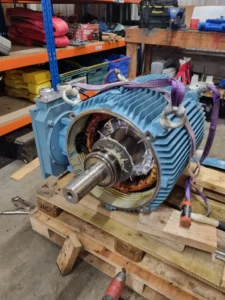
Balintombuie runs with a higher than average load factor; the turbine manufacturer’s suggested lifespan for the bearings of 5 years had been exceeded, but only because regular maintenance hadn’t suggested an immediate change was required. However, there comes a time when the risk of possibilities suggest it’s time to make the change. It’s called preventative maintenance and sometimes it can be a hard sell to customers who aren’t used to that approach.
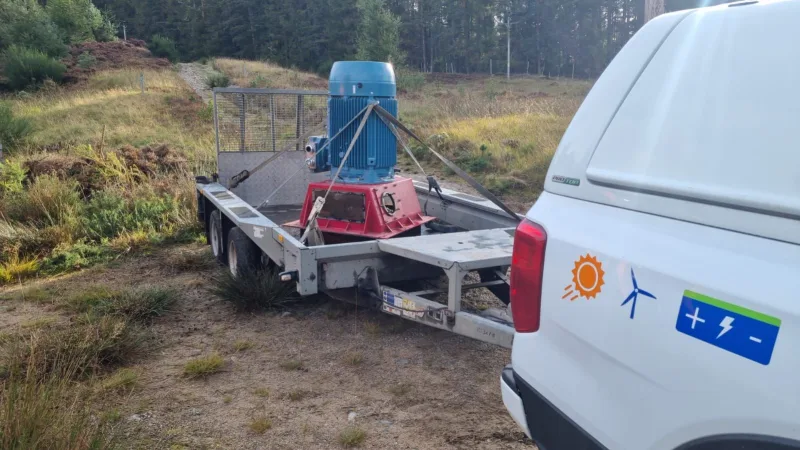
Winter is coming and with it good generation, other works being able to be done at the same time help to mitigate the cost; for example, stripping and checking the spear valves. The downsides of not doing it now though, if there is an issue, are lost earnings during peak generating periods, lack of support availability to do such intrusive repairs at short notice, all the way up to a catastrophic failure and the additional costs of repair (replacement alternators can be on a 6 month lead time).
The turbine was reinstalled a couple of days later and has been up and running at full power. Whilst on site we’ve noticed a couple of things we need to bring on, including pigging the pipeline, so that is now in the schedule. Personally, my temperatures have returned to normal and the creaks and strains have not been long lived, so here is looking forward to the next 10 years!

For more hydro maintenance wisdom and much more, of course, follow Proterra Energy on LinkedIn and sign up to our newsletter for our project stories and adventures.