
Off Grid energy means generating and using electricity independently from the national grid. It typically involves renewable energy sources like solar, wind, or hydro, combined with battery storage and backup generation.
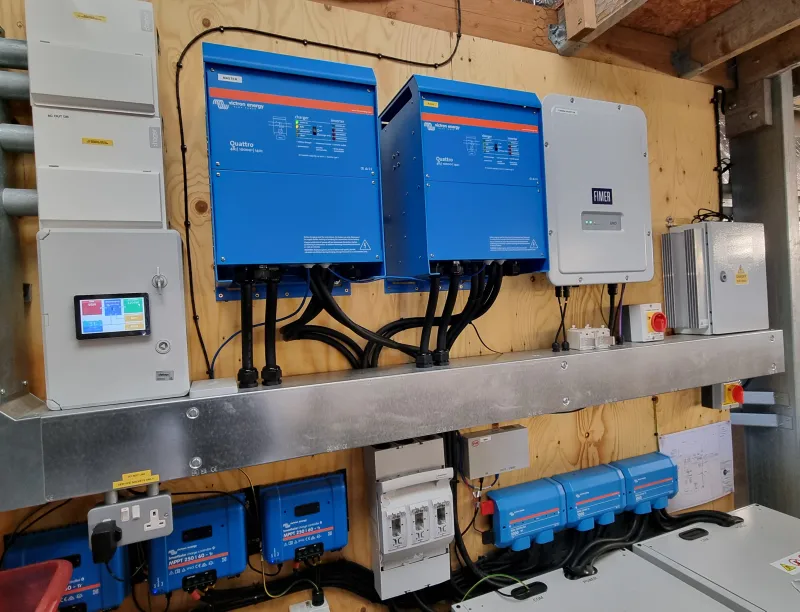
Off grid energy systems allow homes and businesses to generate, store, and manage their own electricity independently from the national grid. These systems typically combine renewable energy sources such as solar, wind, or hydro with battery storage and backup generators to ensure reliable power.
Modern off grid solutions range from small domestic setups to large-scale commercial systems and are designed around energy usage, peak demand, and site-specific conditions. With advances in lithium battery technology, smart energy controls, and remote monitoring, off grid systems now offer a reliable, flexible, and increasingly cost-effective alternative to traditional grid connections.
When we think of Off Grid we might think of television programmes of families who live at the top of a hill in a bothy, but actually it is a lot more common than that.
Off Grid is pretty much what it says: off the Grid. From our perspective the grid we are talking about is the national grid, the electricity network that takes power to our homes and businesses. It may surprise people to know that there are many places in Scotland, and in particular the Highlands, that are Off Grid. In some cases, they might be 8-10 miles from the nearest grid connection. In many others they are only 300-400 metres from the nearest power line but often that’s enough to make people consider off grid power systems as an option.
People choose off grid systems due to remote locations, high grid connection costs, energy independence, or resilience against outages.
For those remote sites there is very little option. Where the power requirement is associated with a new development, i.e. the Client is building a new house or a new building in the remote location, then we can start from scratch. If they have an existing site then typically they will have had some power generation previously, often an old Lister Generator that “dunk dunks” away in a dirty shed out of sight. In that case we may be looking to develop what they have. These were where we started out in 2013 and many of our Off Grid installations have stemmed from this type of project, some 20-30 so far.

There are fully off grid systems, hybrid systems that operate alongside the grid, and systems designed for backup or resilience.
However, there are new types of Off Grid system that we are increasingly involved in and we can split these into 3 different groups:
Off grid system design starts with an energy assessment, followed by system sizing, renewable generation selection, and battery storage integration.
For these systems we are able to use the knowledge and experience we have built since 2012 to develop modern systems that provide renewable (and, where required, diesel powered back up) energy systems to meet our Clients’ requirements.
As with typical Off Grid systems these are holistic in their view. We start with an energy appraisal or assessment, linked closely with an electrical understanding of their local energy network. This might just be within a single property but often it is a network of buildings or properties which may cover up to several acres of ground or even be several kilometres apart. From there, we look at what their objectives are, and start to build the system.
Off grid and renewable systems are affected by planning permission, grid connection rules and, in part, national frameworks such as NPF4.
It is important to note that with energy systems (and especially those with some form of link to the grid) the Client’s aspirations and the technical capability are not the only inputs to any design. The legislative requirements around installing renewables, battery storage and their link to the grid are ever changing (and by changing I mean increasing). Some of these affect all renewable energy systems, some of these are reasons to consider Off Grid as opposed to grid-tied systems.
There are many examples of this but we’ll pull out a few so as to give some indication of what these might be.
The installation of roof mounted solar is fairly benign and doesn’t usually require permission.
Installation can be approved under permitted development, unless you live in an area with designations; for example, National Scenic Areas or in a listed building. This can require roof-mounted solar to have to undergo planning permission. Note that planning authority fees can be up to £595 for planning permission, and that’s just their fee, not the cost of preparing the required documentation and any studies.
Ground-mounted solar systems often require full planning permission, especially for non-domestic installations.
Ground mounted solar, which is often the most technically optimised, is even more challenging to install. Non domestic arrays over 12 m2 require full planning permission (for reference, 12m2 of solar panels is about 3 kW). Domestic ground mounted solar arrays can be installed under permitted development subject to placement and size criteria.

Battery storage connected to the grid can trigger connection upgrades due to increased load and export capacity.
Battery storage that is connected to the grid, whether or not it is used solely to store your own generation or for import or export of electricity, will be viewed as an increase in load and an increase in export. Different rules apply to each, with the capacity of the controlling inverter determining the complexity of the connection. Even though your current electrical connection will allow you to consume a certain amount of electricity, different thresholds are applied to battery storage and renewable installations which may require you to upgrade your grid connection at some cost (or go Off Grid!).
NPF4 introduces stricter planning, environmental, and biodiversity requirements for renewable installations.
Changes to the National Planning Framework (NPF4 currently) add further requirements, about how and where you can install, and things like biodiversity gain – where the applicant is obliged to improve biodiversity where it is deemed some may be lost by any installation. This is for any installation that requires planning permission, and is a cost to be borne even before works begin.
So in summary, Off Grid systems are varied. They may have different reasons for coming into being, and are usually somewhat unique in the blend of considerations that will determine their final design.
What is great about this is that there are a huge number of options in designing and building Off Grid systems, from type of generation, storage, size and manufacturers of equipment. There will, inevitably, be something for everyone.
Off grid systems range from small micro setups to large-scale systems powering multiple buildings or entire sites.
Off Grid systems can vary significantly in size. The smallest system we have installed was a 250W hydro Off Grid system to power a set of electric gates (not our only Off Grid gate system!) right up to 400kWh, 200kW Off Grid systems that power almost whole villages, with houses, lodges, farms and workshops.
Sizing an off grid system depends on energy usage, peak demand, available renewable resources, and budget.
The first step in determining the size of the Off Grid system is what your requirement is:
That all sounds very design led but there are some common sizes and applications that we can discuss.
Micro off grid systems are small installations (around 3kW) designed for basic power needs like lighting and charging devices.
A small Off Grid bothy with a few lights and some charging infrastructure for phones and laptops might be in the region of 3 kW. It would likely use solar for generating purposes and possibly a small wind charger to augment the solar, if the wind resource is suitable (if it is windy enough).
Small systems cannot support high-energy appliances and must be carefully matched to realistic energy usage.
It is important to recognise the energy use for the Off Grid system, and make sure you are realistic. Fitting a 3kW system and then attaching a portable fan heater to it is not going to work reliably or sustainably.
Solar, wind, and hydro are the primary energy sources used in off grid systems, often combined in hybrid setups.
Solar is fairly ubiquitous in that we tend to be able to attract sunlight wherever we are. Its effectiveness is varied of course – not as good in a shaded area but generally we can get sun to contribute. It will help to charge the system up for use when you need it, storing power in the batteries.
Most off grid systems include backup generators to ensure reliability during low renewable generation periods or for high peak load.
Smaller Off Grid systems if coupled with a generator, tend to use small portable sets that can be plugged in when required to boost battery state of charge. It’s important to select the right generator to work with your inverter.
Wind as backup power
Wind turbines can be used too, but note that even the smallest require planning permission.
There is only one physical wind turbine that does not (at the time of going to press) require planning permissions and that is not practical for micro Off Grid systems, it’s a 20m tower, with a 13m blade span that pretty much requires a crane to install! Sounds a bit daft, but that’s something to take up with the planning authorities.
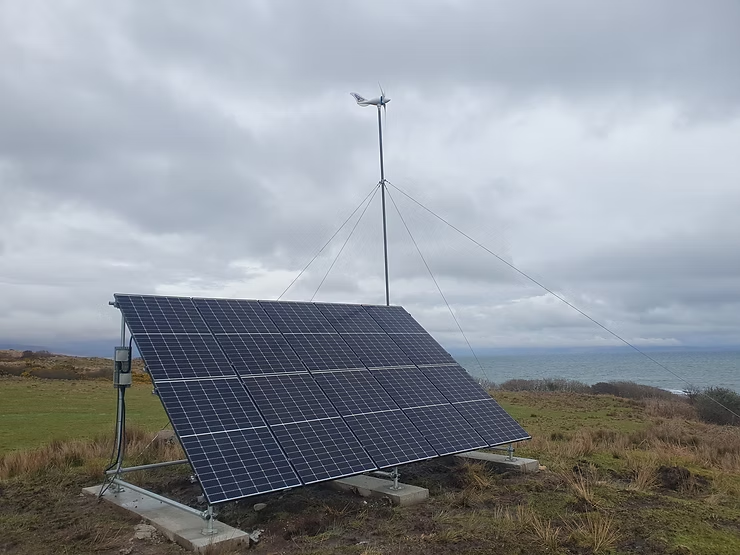
Hydro systems often require complex permitting, making them less viable for small-scale installations.
Why wouldn’t we typically consider hydro at this scale? Because the consenting requirements for hydro schemes in Scotland require full planning permission and an EASR permit from SEPA (formerly a CAR licence). The cost of putting these permits in place will often be more than the installation cost for the whole hydro system.
That is not to say it isn’t possible, and we have done it before but the hydro in question was fed by a road drain!
Modern domestic off grid systems are designed for homes and small businesses, while large-scale systems are fully bespoke and can power multiple buildings or commercial operations.
Modern domestic off grid systems typically range from 12–18kW and are designed for homes and small businesses, while large-scale systems are fully bespoke and can power multiple buildings or commercial operations.
Modern domestic off grid systems are usually sized between 12–18kW, allowing them to support most household and small commercial energy demands.
Modern Domestic or Large Scale Domestic
For the majority of domestic scale Off Grid systems we install, we usually start to look at systems of about 12-18kW capability. This is big enough to manage most domestic and small commercial electrical loads especially where they are not in constant use.
Modern domestic off grid systems are usually sized between 12–18kW.
For the majority of domestic scale Off Grid systems we install, the 12-18kW capability is big enough to manage most domestic and small commercial electrical loads, especially where they are not in constant use.
Domestic off grid systems use intelligent controls to manage energy usage, prioritise loads, and optimise available generation.
On systems of this size, we start to become a bit more intelligent about how we use energy. We will incorporate things like diversion loads to use up any excess power when it is generated and vice versa. We may choose to control any big loads that could impact upon the system, making sure they only come on when there is power available.
This intelligent control is all managed by the Off Grid system and means we think of it as just that: a system. This is the bedrock of our installation process.
Most domestic off grid systems use hybrid renewable energy sources such as solar, wind, and hydro to ensure year-round generation.
Renewable energy sources are a combination of solar, wind and hydro. A hybrid system is best if it is possible, using a combination of solar and hydro or solar and wind. The typical generation patterns of these combinations overlap, in winter conditions the wind and hydro do best, in the summer months the solar is the main generating system.
Backup generators are commonly integrated into off grid systems to provide reliability during periods of low renewable energy generation.
We will integrate backup generators with the system. That is, integrate the generator both electrically and within the control system so that it can be called upon when required. We are practical about this – there will be times of need and there is no point shying away from that. But it’s about perspective, if running a generator for 100 hours a year (that’s 1.2% of the time) can make an Off Grid system reliable, then it’s worth it.
Remote monitoring allows users and installers to track performance, identify issues, and optimise system efficiency in real time.
These systems will often be fitted with remote monitoring to allow our Clients, and us if they would like, to be able to look in remotely and check all is ok, or to download data to understand their usage if they are as geeky as us!
Remote monitoring allows us to be able to identify any trends to see how we might use our systems better, or to be able to offer remote support. Systems vary as people vary, some folks like to be really hands on, others do not, and remote monitoring allows us to carry some of that burden for you if you would like.
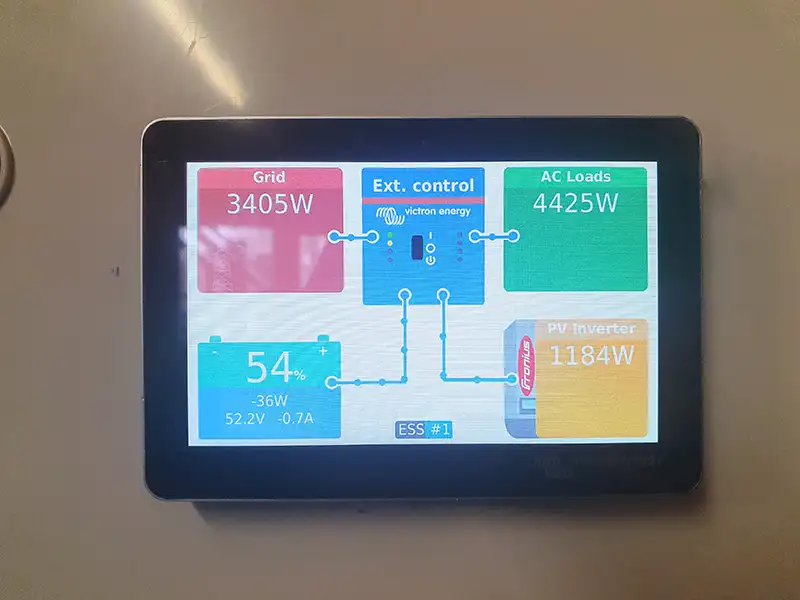
Large-scale off grid systems are bespoke energy solutions designed for commercial sites, estates, or multi-building properties with high energy demands.
Large off grid systems are fully customised based on energy demand, peak loads, and site-specific requirements.
Large Domestic and Commercial off grid Systems
From here – the sky is the limit!!
Really once we get to this point, there is no typical system. Off Grid set ups are designed to suit the requirements of the Client and their needs. The same approach of understanding electrical use and peak loads apply. The system is designed based on these key facts.
Off grid systems can scale to megawatt levels, powering industrial operations, distilleries, or large estates.
The largest system we have looked at here is a 1MW Off Grid system using a combination of two hydro schemes and 200kW of solar to power a future distillery. Why? Because the grid is not big enough in the location to provide the power and the costs of upgrade would be significant. Bigger systems are possible, and do exist, it just comes down to cost and need.
Large off grid systems can power multiple buildings and rely on hybrid energy generation with battery storage and backup systems.
Our largest operational day to day Off Grid system has a 400kWh battery and 200kW throughput. It powers 3 houses, a larder, a chalet, workshops, offices, a large shed and a big house (or small hotel). It’s a hybrid system of course, and the different generators do the heavy lifting at different times of the year. At times they overlap so we make sure they speak nicely and know to pull back in these instances so as not to overload the system.
Backup generators ensure continuity during poor weather conditions or peak demand periods in large systems.
There is a back-up generator for the busiest of times, or when the rain isn’t falling and the sun isn’t shining as much. Changeable weather conditions – such as we have experienced at the start of this year – mean the generator is an important part of the system for our Clients.
Hybrid off grid systems can dramatically reduce diesel consumption by prioritising renewable energy sources.
On another large Off Grid system we replaced 5 diesel generators with one main backup generator and an Off Grid system comprising solar and hydro. Peak usage of diesel dropped from almost 2,000 litres per month to 50 litres of diesel in its whole second year of operation. So whilst it is there as a backup, it isn’t the main supplier of power. In this case, with no roads to the site, the cost per litre of diesel is a lot higher than the pump price, so the cost saving was significant, contributing to the pay back of the system.
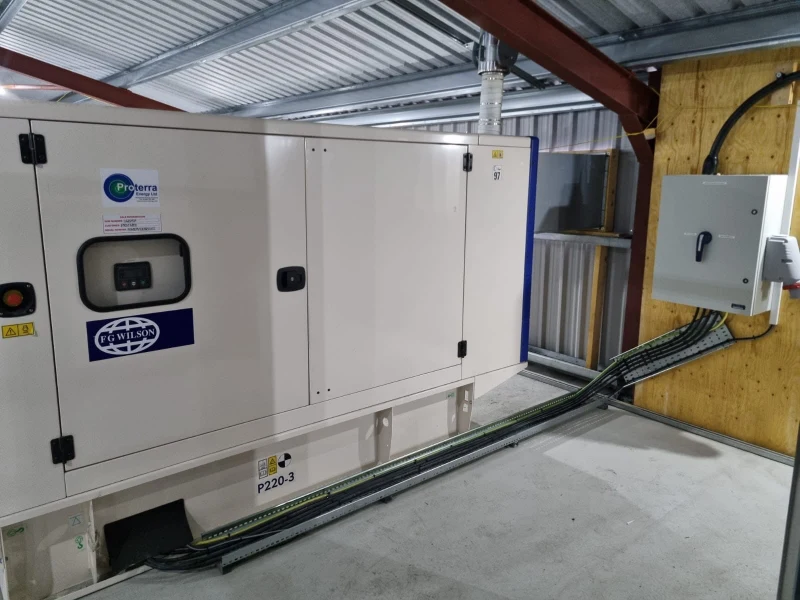
Some commercial off grid systems use the grid as a backup supply while relying primarily on renewable generation.
For some commercial systems we use the grid as that back up. These are the Type 2 New Off Grid systems set out above. Where the Client would like to use renewable energy to provide the majority of their power but realise, practically, that it cannot provide all their power, and so the grid is there for shortages.
Battery storage is the core of any off grid system, enabling energy use when generation is low and supporting peak demand.
Incorrect battery sizing can significantly impact system performance, reliability, and usability.
Batteries as Part of an Off Grid System
This brings us to the storage part of an Off Grid system. It is the heart of any Off Grid system and getting the sizing wrong can have significant implications on the usability and effectiveness of the system.
Battery storage should be designed early in the process based on energy demand, duration, and peak load requirements.
As humans we are often fixated on “how big” something is, as opposed to how effective it is.
Often in Off Grid design, there is a temptation to look at what feeds it and make that as big as possible and worry about the batteries later, sometimes at the end of the budgeting process. But that is not correct. Battery storage should be part of the early design phase, looking at how much energy you need and for how long, but it’s not just that. If you have high peak loads, it is the battery that will provide that punch of power.
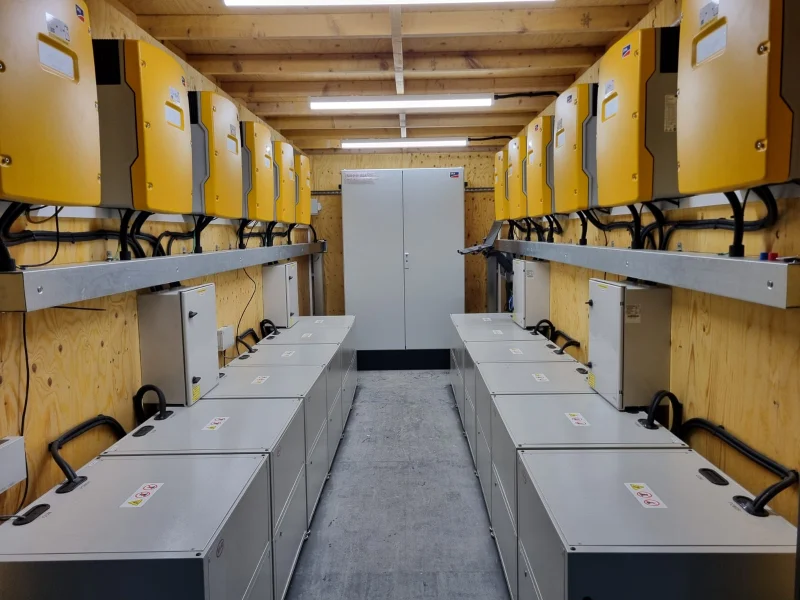
Generators can support systems but cannot replace batteries due to startup delays and operational limitations.
There are, of course, workarounds: we can programme a generator to act as big brother – sitting there quietly in the background and ready to start when required to support the system. However, this takes time. Time to start, to warm up, then connect to the system and provide that backup. So whilst this can help, it is just that – help.
Lithium batteries are now the most common in off grid systems due to efficiency, monitoring capability, and lifespan improvements over lead acid.
Battery technology is advancing fast. And most of this comes from the far east, though we have technology being developed in the UK too, and other centres across the world. When we started installing Off Grid systems we relied on big heavy lead acid batteries. They were dumb, but strong, and well looked after they would last. However, the “well looked after” bit sometimes got forgotten with all the day-to-day activities of the site. That’s where problems can occur and the lifespans of battery banks quickly shrink.
For the most part, lithium batteries are now the most common and commercially ready. They are smart and speak to their inverters many times a second, communicating how they are doing and what they are doing. This is important as it allows them to manage their own performance and let the inverters tell us, the humans, how things are going and if they need help (if only we’d notice).
Lithium batteries offer improved lifespan, efficiency, monitoring, and protection against over-discharge compared to traditional systems.
This helps to reduce or eliminate over discharge of batteries to critical levels, or damaging the batteries through high peak loading. They can monitor their own health and will give an SOH (State of Health) figure to let us know how they are getting on (like a trip to see the Doc). They can be hooked up to remote monitoring so that you can see each individual battery if you would like. They can be an expensive part of the system so it is important to look after them.
This results in longer lifespans and better all round performance. It doesn’t mean to say they are perfect, but they are markedly improved.
Lithium batteries are also smaller and have more capability for their size, in terms of storage but also capability. As with all products, there are premium brands and cheaper options, and the choice can be down to how likely the Client is to work them hard, and or budget.

Remote monitoring improves system reliability, performance, and maintenance by providing real-time data and alerts.
Monitoring allows better performance tracking, early fault detection, and improved system efficiency.
Management of Off Grid Systems Inc. Remote Monitoring
Our ability to communicate with devices and tools is ever growing, with fridges and toasters now telling us their woes. But with an Off Grid system that costs anything from £15k up to millions, this is a good thing.
All of our newly installed Off Grid systems have some form of remote monitoring, and for those installed before this was as readily available, we are retrofitting.
As with any system, monitoring its performance and behaviour gives us improved output, improved uptime, and reduced chance of failure. The easier it is to monitor, the more likely it is that we will do it.

Remote monitoring provides data insights, peace of mind, early issue detection, and remote support capabilities.
There are a number of benefits to remote monitoring:
Onsite support is sometimes required, but monitoring reduces the frequency and severity of issues.
There will always be instances when onsite support will be required, and we are still here to provide that. Off Grid systems are designed with redundancy and so can deal with unforeseen circumstances, but managing the things we can see, when we can, means, in general we are in a better position to deal with the things we cannot control.
Modern off grid systems are advanced, integrated energy solutions compared to older basic setups.
Off Grid systems have become more than a truck battery and some 12V bulbs strung up about a bothy, somewhere over the hills and far away. As we use more and more equipment, as we are more and more connected, nearly everything we do requires energy.
Our worlds are interconnected, through choice much of the time and because of the efficiencies it brings. Our Off Grid systems are designed to deliver interconnectivity, choice and efficiency.
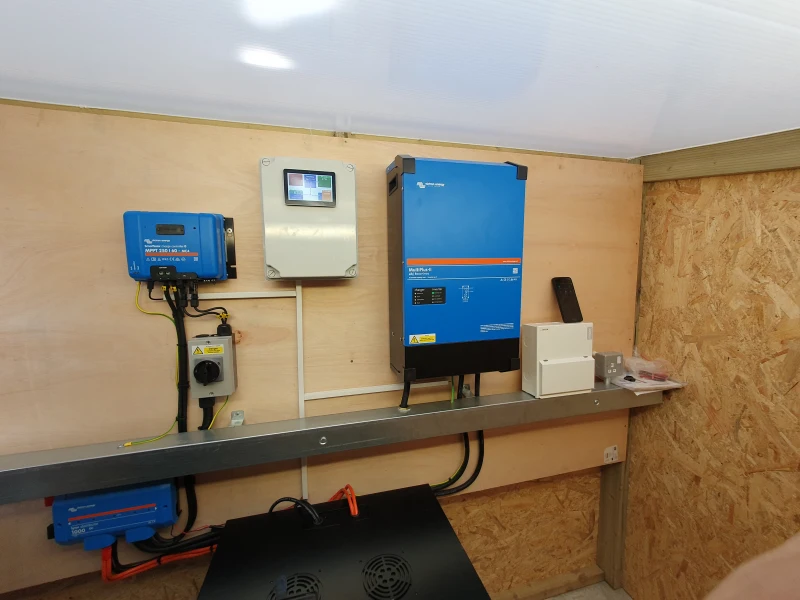
Off grid energy systems have evolved into highly sophisticated and reliable solutions for both domestic and commercial energy needs. Whether driven by necessity, cost, or a desire for energy independence, these systems offer a flexible approach to power generation that can be tailored to almost any environment or requirement.
From small micro systems to large-scale commercial installations, the key to success lies in thoughtful design—balancing energy generation, storage, and demand. Battery storage plays a central role, supported by intelligent controls, hybrid renewable inputs, and, where necessary, backup generation.
As technology continues to advance, particularly in battery performance and system monitoring, off grid solutions are becoming more efficient, accessible, and scalable. For many, they are no longer just an alternative—but a preferred way to generate and manage energy in an increasingly uncertain and energy-dependent world.
Get in touch with Proterra Energy directly, or use the form below to request an email or call back and we’ll get in touch as soon as possible.